Build an original English-language image generation brief with the following direction.

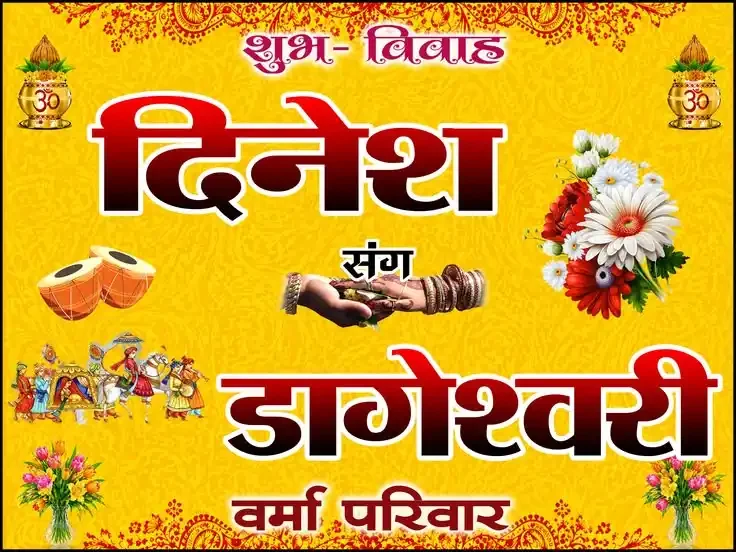
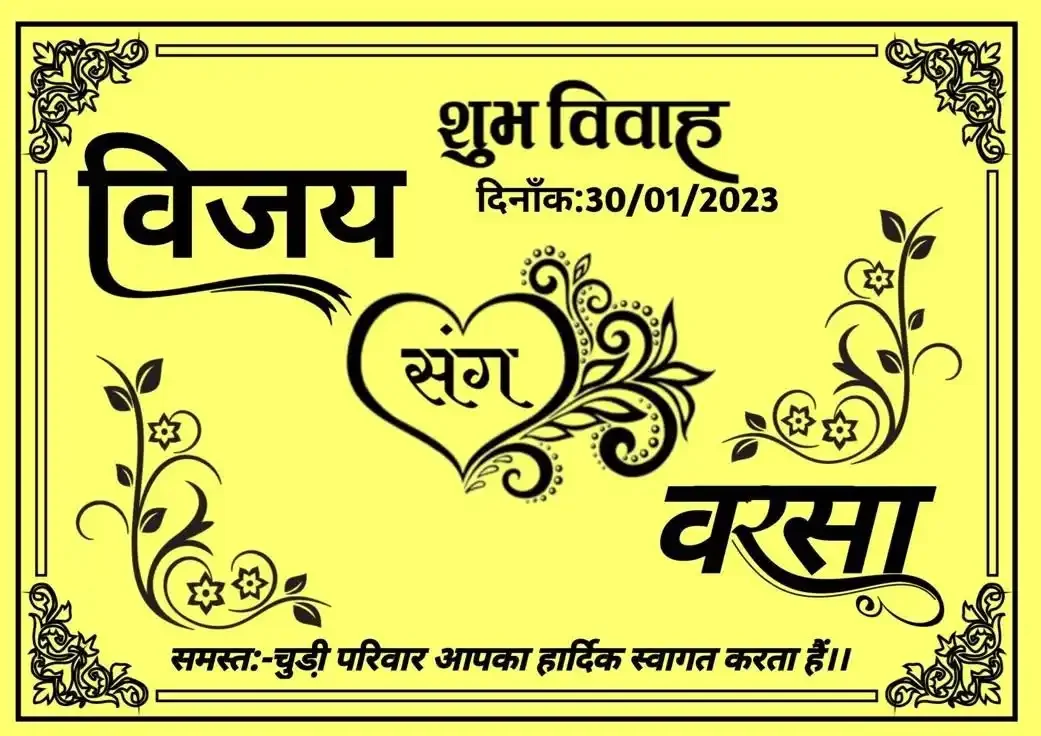
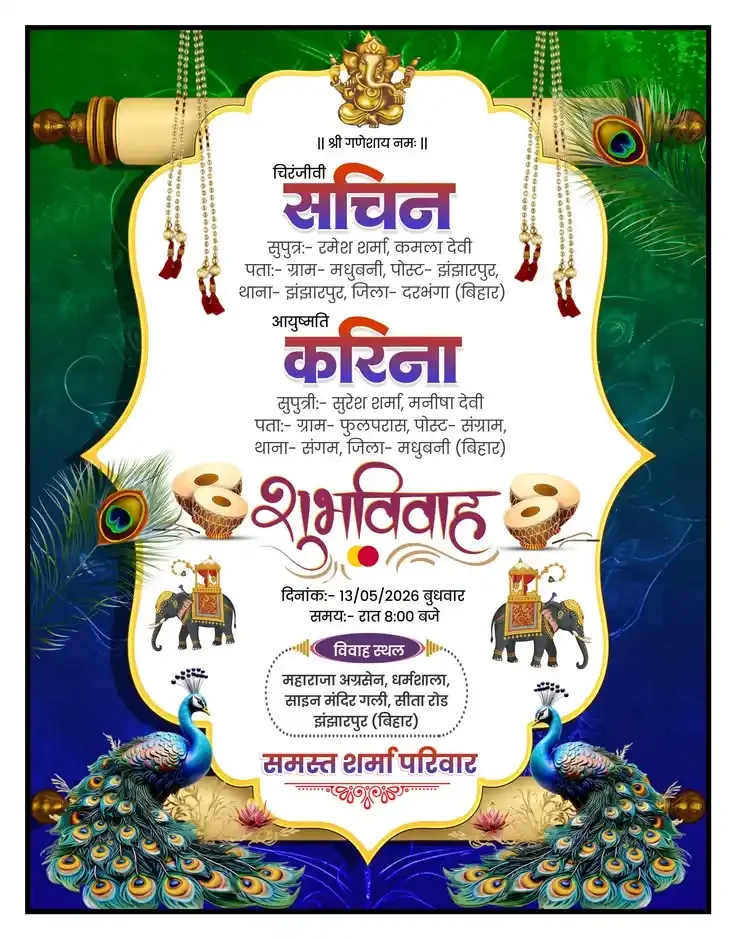
Subject and setting: All illustrative elements are present. Using the same fonts for all parts. And positioned exactly as shown in image_0.png. In Hindi. Classic. As in image_0.png). वर्मा परिवार. In a smaller red Hindi font. At the very bottom center. In the bottom right corner is a glass vase with mixed red and yellow flowers. And musicians with instruments. Horses. On the bottom left. Below the bride's name. To the right of the bride's name is a decorative bouquet of mixed red and white gerbera and smaller flowers. The other with a gold kada) held together in a 'kanyadaan' or 'varmala' gesture. Between the two names. As in image_0.png). डागेश्वरी. Reads "[BRIDE_NAME]" (e.g. A placeholder. The bottom name. As in image_0.png). दिनेश. Reads "[GROOM_NAME]" (e.g. A placeholder. The top name. Prominent names rendered in a bold red-and-gold gradient Hindi font. Topped with coconuts and mango leaves. Each featuring a red "ॐ" (Om) symbol. At the very top center. Patterned yellow surrounding setting with detailed traditional red floral and geometric border motifs at the top and bottom. Set against a rich. Based on image_0.png. Traditional Indian wedding invitation card (patrika) graphic design. An intricate.

Composition and styling: Festive Indian print design with vibrant colors. The overall style is a clean.

Lighting and camera: The central focus is on two very large.

Output requirements: The text is sharp. Is the text "[FAMILY_NAME]" (e.g. Is a detailed illustration of a traditional 'baraat' (wedding procession) with decorated elephants. To the left of the groom's name is an illustration of two traditional Indian dholaks. With the smaller Hindi text "संग" (Sang) directly below them. There is an illustration of two hands (one with mehendi and glass bangles. Flanking this text are two ornate golden Kalash (sacred pots) within decorative frames. The Hindi text "शुभ-विवाह" (Shubh-Vivah) is written in red and gold gradient font.